Had Cromwell lived . . .
Here’s an exploration of what might have unfolded if Cromwell had weathered the court intrigues of 1540 and stayed at Henry’s side through to his death in 1547—and beyond.
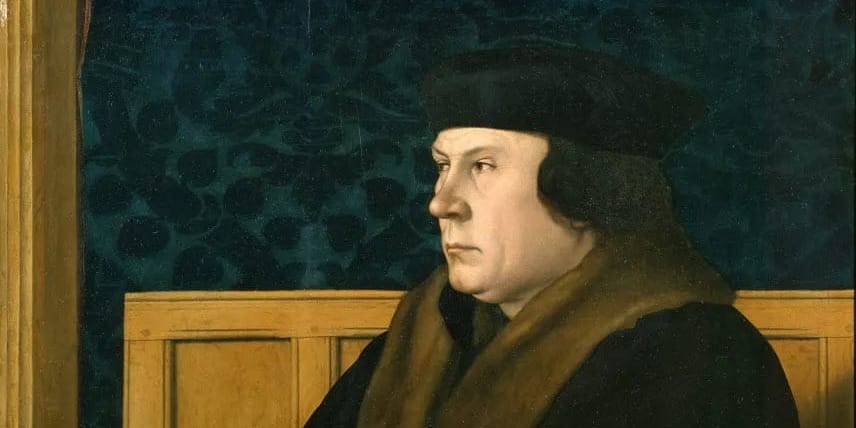
I just finished the fantastic TV show, Wolf Hall. This got me thinking, and I did a little hypothetical exploration of what might have unfolded if Cromwell had weathered the court intrigues of 1540 and stayed at Henry’s side through to his death in 1547—and beyond.
Continued Administrative Reform and a Stronger Tudor State
- Deepening the bureaucratic revolution. Cromwell’s creation of specialized revenue courts (e.g., the Court of Augmentations, First Fruits & Tenths) and his push for a meritocratic civil service would likely have accelerated. By 1547, England might already have had a far more centralized, professional administration, laying the groundwork for a modern cabinet system rather than the more ad hoc Privy Council that emerged.
- Improved fiscal stability. With Cromwell’s stewardship, the proceeds of dissolved monasteries would have been more systematically reinvested in royal services (navy, border defenses, poor relief) rather than frittered away on court extravagance. A better-managed treasury could have limited Henry’s resort to unpopular forced loans and debasement of coin.
More Enduring Protestant Settlement
- From reform “on the cheap” to genuine doctrinal change. Cromwell’s sympathy for evangelical ideas and his patronage of reformers (e.g., Latimer, Cranmer) would have steered the Church of England further from Rome. Rather than the conservative retrenchment under the Six Articles (1540) and intermittent reversals, England might have adopted a consistently Protestant liturgy and clerical marriage by the mid-1540s.
- Clergy and laity are better prepared. Cromwell’s insistence on Bible translation and parish-level preaching would have meant that, by 1547, a critical mass of educated clergy and lay readers was in place, smoothing the later Edwardian Reformation and making the swing back under Mary less traumatic.
A Smoother Succession and Regency for Edward VI
- Choicest marriage alliances. Cromwell’s diplomatic reach into Protestant Germany could have secured a more advantageous match for Edward, perhaps a Reform-minded princess from Saxony, and bolstered England’s continental alliances and Protestant identity.
- Council under “Cromwell’s Heir.” If Cromwell had outlasted Henry, he likely would have been named Protector or regent guardian, or at least dominated the Regency Council. His administrative talent and centralizing vision might have prevented the factional feuds that characterized Edward’s minority (e.g., Seymour vs. Dudley), producing a steadier government and fewer rebellions.
Altered Foreign Policy: A Protestant England in European Power Politics
- An English-German alliance. Cromwell’s outreach to the Schmalkaldic League could have lined England up firmly with German princes against Habsburg Spain, rather than the later Anglo-French entente. That might have drawn England into continental conflicts on a very different axis and possibly forestalled Mary’s marriage to Philip II, or changed the balance in the Schmalkaldic War (1546–47).
- Scotland and Scotland’s Reformation. With Cromwell’s Protestant zeal, English policy toward Scotland may have been more aggressively supportive of John Knox’s reforms. A Cromwell-led regency could have attempted a true “Protectorate” over Scotland, binding it more closely to Protestant England well before the Union of the Crowns.
A Different Fate for Mary and Elizabeth
- A more secure Protestant inheritance. Under Cromwell, legislation protecting Edward’s Protestant reforms would likely have been more robust, making it legally harder for Mary to reverse them in 1553.
- Elizabeth’s grooming. Cromwell’s meritocratic court might have recognized Elizabeth’s talents earlier, securing her status and education. That could have meant an Elizabeth more prepared (even emboldened) to shape the Church of England after her accession, rather than feeling besieged by Marian persecution.
In Summary
Had Thomas Cromwell remained in power through Henry’s final years, England would almost certainly have emerged from the Henrician upheavals with:
- A stronger, centralized state: setting the stage for a more modern, professional administration.
- A firmly Protestant national church: less prone to the violent reversals of Mary’s reign.
- A smoother minority government under Edward, reducing factional violence and rebellions.
- A realignment of foreign alliances around the Reformation, with long-term implications for Anglo-Habsburg rivalry and the fate of Scotland.
- Greater security for the later Tudor queens, ensuring that both Mary’s and especially Elizabeth’s religious settlements had deeper institutional roots.
In such a scenario, the mid-Tudor crisis might never have darkened England’s doorstep—ushering in instead a more stable, Protestant nation well before Elizabeth’s Golden Age.
