The Little Black Classics | Eve Of St Agnes by John Keats
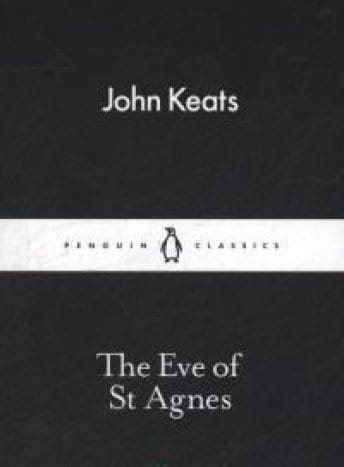
This slim volume of John Keats’ poetry captures the essence of Romanticism through its profound exploration of love, beauty, imagination, and the delicate balance between reality and idealism. This volume, featuring The Eve of St. Agnes, La Belle Dame sans Merci, Lamia, Ode to Psyche, and Ode on a Grecian Urn, presents a rich tapestry of narrative and lyric poetry that together reveal the full scope of Keats’ artistic vision. Through myth, medieval legend, and philosophical reflection, these works invite readers to engage with timeless questions about passion, creativity, and the eternal nature of art—making the collection as resonant today as it was two centuries ago.
Complementary Aspects
Exploration of Romantic Themes: All five pieces delve deeply into Romantic ideals—love, beauty, imagination, and the tension between reality and fantasy. They explore how passion and creativity interact with societal and metaphysical constraints.
Mythology and Medievalism as Lenses: Keats draws on classical mythology (Ode to Psyche, Ode on a Grecian Urn, Lamia). Medieval folklore (The Eve of St. Agnes, La Belle Dame sans Merci) to frame timeless human experiences in richly symbolic, otherworldly settings. This blending highlights his fascination with the past as a source of eternal truths and aesthetic inspiration.
Narrative and Lyric Fusion: The volume balances longer narrative poems (The Eve of St. Agnes, Lamia, La Belle Dame sans Merci) with reflective lyrics (Ode to Psyche, Ode on a Grecian Urn). This gives readers a dynamic experience—immersive storytelling alongside concentrated philosophical meditation.
Imagination’s Power and Limits: Each work contemplates imagination’s ability to create beauty and meaning (internal temples, eternal art, magical transformation) while acknowledging the fragility of such illusions when faced with reality or death.
Contrasting Elements
Tone and Outcome Variations:
- The Eve of St. Agnes offers a romantic, hopeful tale where love overcomes danger.
- La Belle Dame sans Merci is tragic and haunting, with love leading to desolation.
- Lamia explores tragic disillusionment, the shattering of fantasy by reason.The odes, especially Ode on a Grecian Urn, adopt a contemplative tone, focusing on eternal beauty rather than narrative drama.
Narrative vs. Abstract: The narrative poems dramatize conflict and emotion through characters and events. At the same time, the odes reflect abstract ideals and philosophical musings on art, soul, and beauty.
Human Passion vs. Artistic Permanence: The stories often portray fleeting, intense human passion subject to loss and suffering. In contrast, the odes celebrate art’s ability to capture and preserve eternal truth and beauty.
Why They Work Well Together
Comprehensive Portrait of Keats’ Vision: These works present a full spectrum—from sensual narrative and emotional intensity to idealistic contemplation—offering a layered understanding of Keats’ preoccupations with love, imagination, mortality, and art.
Dialogue Between Stories and Ideas: The narratives give vivid, emotional examples of themes the odes explore philosophically, creating a rich dialogue across forms that deepen the reader’s insight.
Balancing Beauty and Reality: By juxtaposing hopeful and tragic tales with reflective odes, the volume captures the dual nature of Romanticism itself—the yearning for transcendence and the sobering reality of human limitation.
Timeless and Relevant: This collection invites readers to engage with fundamental questions about creativity, desire, and truth—topics that continue to resonate today in art, psychology, and culture.
In short, these five works function as complementary parts of a whole, offering a multifaceted exploration of Keats’ genius. They show how he balances storytelling and lyricism, myth and emotion, idealism and realism—making the volume a compelling, enduring study of Romantic poetry.